


I can feel that I don’t really want to write this.
Not because I don’t remember—but because I’m no longer sure what to do with what happened.
This is a new thread alongside my usual writing in Parts and Perspectives.
Right now, I find myself in a place of confusion.
I’ve had experiences that were genuinely mind-opening—moments of clarity, connection, and insight that felt deeper than anything I could have imagined. There was something undeniably real in them. Something that opened my heart and expanded how I saw the world.
And yet, I’m left with a kind of sadness.
Because alongside those experiences, I’ve watched how little people actually change. I’ve seen how power moves through spiritual spaces in ways that aren’t so different from anywhere else. The same dynamics that shape corporations and institutions often find their way into spaces that are meant to be about truth, healing, or awakening.
It’s not always like that. I’ve met people—teachers and guides—who hold power with integrity. But that’s part of the tension. Because alongside them, there are others who don’t. And it’s not always obvious who is who.
What makes it harder is that these substances can open people to something profoundly true, but they are still held by human beings. And human beings are not always trustworthy.
Looking at the field now, compared to when I first entered it, it feels more crowded, more visible, and in some ways, more confusing. There are more voices, more “guides,” more certainty—but not necessarily more depth or integrity.
What did they open for me?
A lot.
Before them, I lived mostly in my head. I could think about my struggles, even understand them to some extent, but it stayed theoretical. I had ways of explaining myself that kept me at a distance from what I actually felt.
The plants changed that almost immediately.
They brought me into my body in a way I hadn’t known before. In the early ceremonies—especially with ayahuasca—I would sit and shake. Not violently, but consistently. Tremors, yawning, crying, sometimes laughter. It would come in waves, and while I could probably have resisted it, it felt like something was moving through me that needed to.
So I let it.
Ceremony after ceremony, the same thing. A kind of unwinding. A release that didn’t feel psychological as much as physical. It was the first time I really experienced what it meant to inhabit my body, rather than think about it.
And alongside that, something else opened.
I found myself entering what I can only describe as a realm of “ok.” Not good, not bad—just a kind of problem-free space. I had touched something like it in meditation before, but this was different. The plants allowed me to stay there, to rest in it.
It didn’t erase pain or history, but it showed me that something in me existed outside of all of that. Untouched. Intact.
Later, I would hear this described as the “unbroken self.”
But at the time, I didn’t have the language.
I just knew that there was a part of me that had never been harmed.
What didn’t change?
I was part of a tradition that held a noble idea: to receive all who arrived. To accept everyone.
But in practice, that meant allowing people into spaces they weren’t ready for—people who didn’t have the psychological stability to work with these medicines. And over time, that had consequences for the community.
For more than a decade, I watched how a small number of individuals could consistently disrupt the group. While most people came with a genuine intention to work together, there were always a few moving in a different direction—resisting, opposing, pulling against the current.
And what struck me was how much impact that small number could have.
It took energy—again and again—from those holding the space. It shifted the group. It diluted something that, at its best, felt like a shared movement in the same direction.
What was harder to sit with was this: over time, some of the most disruptive individuals didn’t fall away. They rose. Through persistence, presence, or something less obvious, they found their way into positions of leadership.
That left me with a deeper confusion about how these kinds of communities actually form and function.
Because the intention is almost always good. A group of people coming together to explore something meaningful—what could go wrong?
What I came to see is that a lot can go wrong if you don’t account for something simple: the human appetite for power.
These dynamics don’t always show themselves openly. They move underneath the surface—shaping relationships, influencing direction, determining who gets heard and who doesn’t.
And over time, I began to realise that what these spaces look like from the outside, and what they actually are, can be two very different things.
What am I trying to make sense of now?
With some distance from these paths, I find myself returning to a simpler question: what do I keep, and what do I let go of?
I don’t want to throw the baby out with the bathwater. I don’t doubt the value of tradition—the role of elders, the wisdom that has been carried and refined over generations. There is something deeply earned in that. Something I still respect.
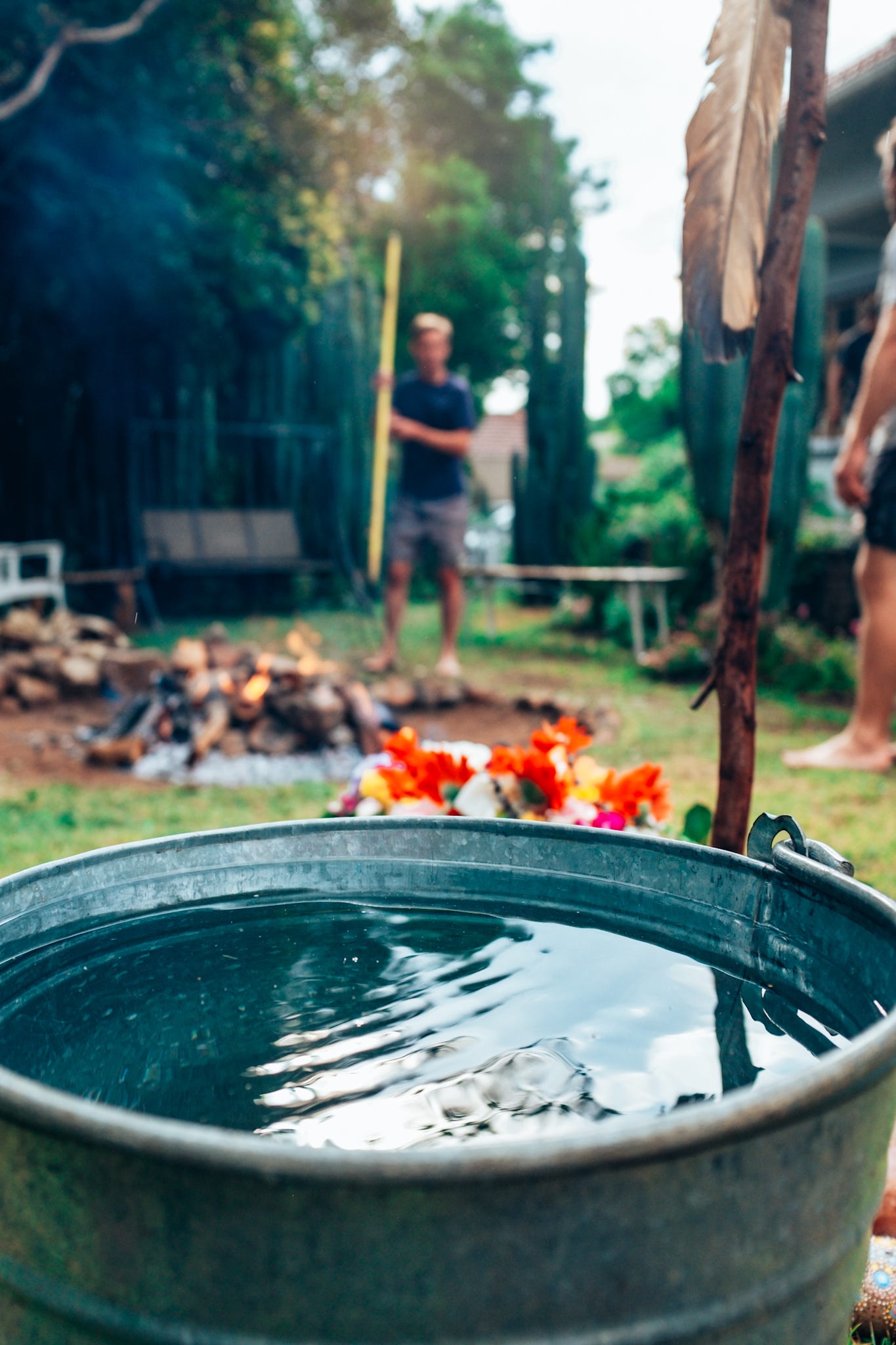
I remember sitting in a tobacco ceremony—an all-night ritual structured around four prayers. Through the night, tobacco was lit and offered to the four directions: humility, intention, power, and gratitude.
When it was my turn, sometime in the early hours of the morning, I felt a genuine reverence. I thanked the elder holding the ceremony and told him that I had always hoped to find myself on a path like this—one guided by something older, something that could show me what I couldn’t see on my own.
That hasn’t gone away.
But neither has the other side of it.
Because these traditions don’t arrive in a vacuum. They land in specific places, among specific people. And in South Africa, where many of these practices were being planted, they needed to adapt—to the land, to the culture, to the people carrying them.
When tradition becomes rigid, it stops listening.
And what I saw, over time, was that the structures themselves didn’t always protect against the very dynamics they were meant to hold. Leadership wasn’t always shaped by integrity or community trust. In some cases, it followed power, persistence, or proximity to authority. The forms of the tradition remained intact, but they didn’t necessarily prevent distortion.
That’s where the tension lives for me now.
On one hand, there is the path—what is given, preserved, passed down.
On the other, there is lived experience—what I know in my own body, in my own context, over time.
Since stepping away, I’ve found myself testing things. Sometimes intentionally, sometimes not. Letting go of certain rules. Keeping others. Trying to understand what still holds when the structure falls away.
I’m not looking to reject tradition.
But I’m also no longer willing to follow something simply because it’s been handed down.
So the question I’m sitting with now is this:
What does it mean to honour what has been given, while still thinking—and living—from where I actually stand?